The pigment in a black ink offers another place to introduce renewable content. Biochar brings a biomass source to that part of the formulation, opening possibilities alongside work on renewable binders and solvents.1
For manufacturers, the interesting question is what that carbon can do on the printed page or finished surface. Independent printing research gives us a concrete starting point.
Turning biochar into a printed image
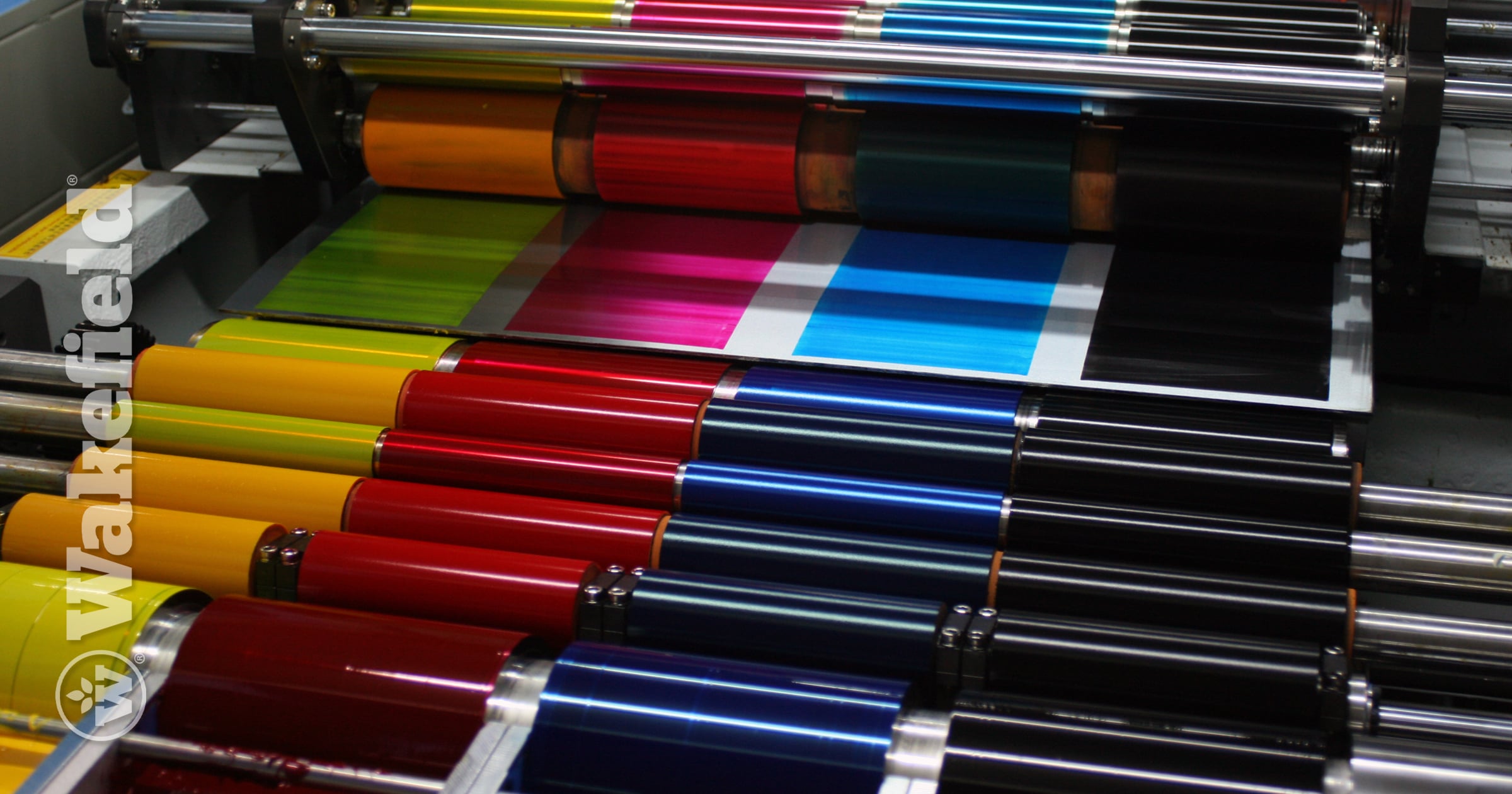
At Rochester Institute of Technology, researchers made experimental flexographic inks from pine biochar and carbonized surplus currency. They milled the carbon, blended it into a polymer vehicle, and used a laboratory printer to produce images and tonal test patterns on paper.1
The team achieved black prints with good reproduction of tonal detail on both coated and uncoated papers. By turning wood and recovered fibers into a working printing pigment, they brought renewable carbon into the image itself.1
The study also points toward packaging graphics and box marking as promising uses. Biochar gives developers another carbon source to work with, and its source, heat treatment, and particle preparation help shape the printed result.1
Bringing renewable carbon into the finish
As with carbon black, the appeal of a biochar-based pigment lies in the finish it helps create. For coatings, depth of black, undertone, and gloss give formulators different ways to shape that appearance. The pigment works together with the binder, dispersion, and surface to produce the final effect.1, 2
Biochar brings a renewable carbon ingredient to that design space. A manufacturer can explore it around a particular product and finish, drawing on its own coating expertise while choosing the carbon material that fits the project.
A dark finish that holds its color
On a wooden surface, biochar can contribute more than a dark shade. Researchers blended finely milled hemp biochar into tung oil and brushed the finishes onto oak and beech. The carbon absorbed UV and visible light, giving the coatings a role in protecting the surface as well as coloring it.3
After six months outdoors, the finishes with higher biochar content showed only a small color change. Their dark appearance held more consistently than either bare wood or wood finished with tung oil alone. For makers of dark wood finishes, that pairs a renewable pigment with a useful protective function.3
Renewable carbon with a clear purpose
Biochar can replace fossil-derived carbon in the pigment itself. In a recent study, producing pigment from agricultural residues resulted in lower estimated greenhouse gas emissions and fossil-resource use than producing conventional carbon black.4
For an ink or coating maker, the opportunity is to connect a useful color ingredient with a renewable source—and carry that material story into the finished product.
Carbon for your own pigment development
Wakefield CarbonMicro® 50 is a fine biochar powder made from wood residuals for manufactured products. Your team can explore it as a carbon input for its own pigment applications, with Wakefield providing material specifications and supply information.
We can help with the biochar side of that work, starting with the CarbonMicro® 50 specification sheet and a discussion of your material requirements. Visit Carbon Black Replacement to connect with Wakefield.
Sources and notes
-
Biochar in flexographic ink 2021. Laboratory inks used specially prepared pigments. The authors reported good tonal reproduction; pine formulations used higher pigment loadings and had lower optical density than the commercial comparison. Packaging marking was a suggested application. CM50 was not tested View Source ↩
-
Coloristic properties of specialty carbon blacks 2023. Technical background on coating color, undertone, gloss, and formulation effects. This reference concerns conventional carbon black; it does not demonstrate biochar equivalence View Source ↩
-
Biocarbon/tung-oil wood coatings 2023. Milled hemp biocarbon on oak and beech underwent 180 days of outdoor exposure in Slovenia. Coatings with 10% and 20% biocarbon had color change near ΔE 2. This describes retention of the dark coating’s color, not the wood’s original shade. Water repellence declined during weathering and did not increase uniformly with loading. Full primary text reviewed; CM50 was not tested View Source ↩
-
Biomass-derived carbon in ink 2026. The primary abstract reports a pigment-level life-cycle comparison and identifies electricity as a major contributor. Full text was unavailable in this review. The results do not establish the footprint of every finished ink or a Wakefield product View Source ↩